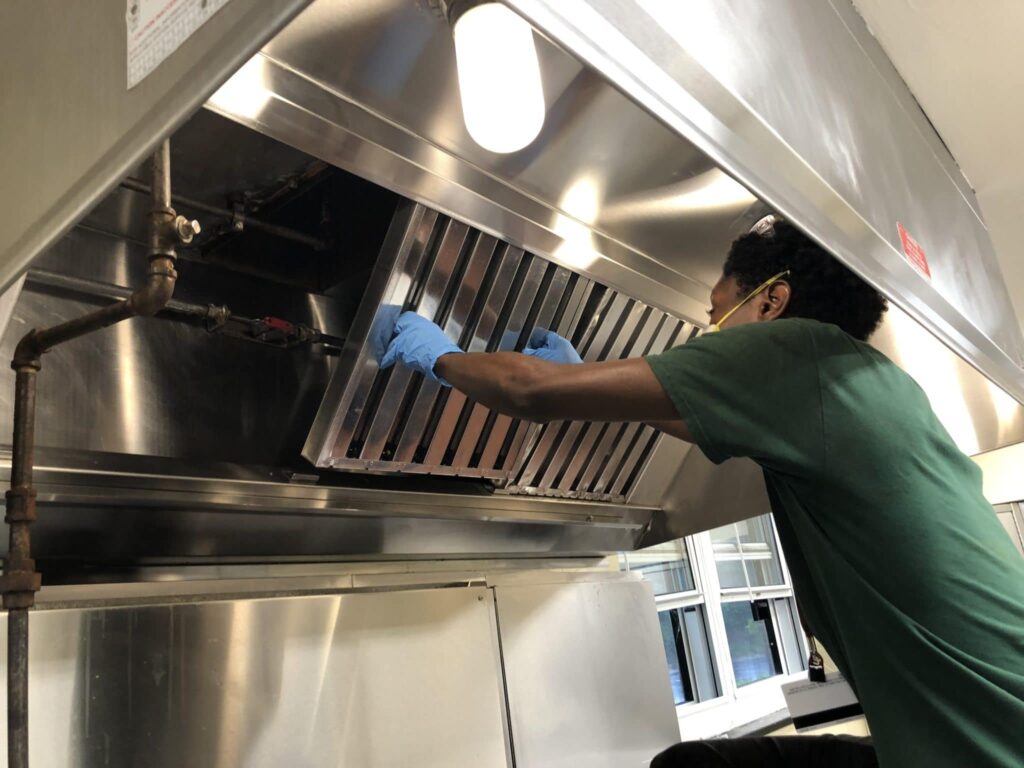
Boston commercial kitchen maintenance

Commercial Kitchen Equipment Maintenance in Boston

Scheduled maintenance for refrigeration, cooking lines, ice machines, dish machines and hoods — planned around your service hours, so problems turn up on a quiet Tuesday instead of a Saturday night.

  • Visits scheduled around your service hours
  • Written checklist and temperature records
  • Most major commercial brands
Planned Visits on your schedule
Recorded Checklist after every visit
Local Boston and Greater Boston
Scheduled Maintenance Visits
Temperature Records for Inspections
Refrigeration to Warewashing
Greater Boston Coverage
Maintenance

Preventive Maintenance

Maintenance that keeps Boston kitchens off the emergency list.

Most equipment failures in a commercial kitchen give a warning first: a condenser running hotter every week, a fryer taking longer to come back up to temperature, an ice machine harvesting thinner cubes. Scheduled maintenance is simply someone looking for those warnings on purpose, before they turn into a call in the middle of the dinner rush.

Boston puts equipment through two hard seasons. In July, the condensers on reach-ins and rooftop units fight humid air that is already warm. In January, the same rooftop units sit in snow and freezing wind, and drain lines on walk-in freezers can ice over. A maintenance plan prepares for both: coils cleaned before the heat arrives, low-ambient controls and drain heat checked before the cold does.

Boston’s water is relatively soft compared with most of the country, so scale builds more slowly here than in hard-water regions. Ice machines, combi ovens, steamers and dish machines still collect it, though — and a descaling interval set for Boston water costs less than one copied from a manual written for somewhere else.

Call (617) 499-7575 to set up a visit. Tell us what you run, how many hours a day, and when the kitchen is quiet, and the checklist gets built around that.

What a maintenance visit covers

Refrigeration

Cooking line

  • Ranges and griddles: burners, pilots and igniters cleaned and tested
  • Fryers: thermostats and high-limit safety checked
  • Ovens and convection ovens: temperature calibration and door seals
  • Gas connections and flexible hoses inspected for wear

Ice, beverage and warewashing

Ventilation

How plans work

A maintenance plan built around your kitchen.

Every kitchen runs different equipment for different hours. The plan starts from what you actually have and how hard it works.

01

What we set up first

  • An equipment list with make, model and location.
  • Visit frequency per unit — busy fryers and ice machines more often than a backup freezer.
  • A visit window that stays clear of your service hours.
02

After each visit

  • A checklist of what was inspected, cleaned and adjusted.
  • Refrigeration temperature readings, ready for an inspection file.
  • Parts that are wearing out, with a recommendation — not a surprise invoice.
03

When something is found

Small fixes are usually made on the same visit. Anything bigger is explained first — what it is, why, and how urgent — so you decide when it happens.

Commercial appliance repair

Signs it is time

Your equipment is asking for a maintenance visit.

None of these is an emergency yet. Each one is cheaper to deal with now than after it becomes one.

1

Coolers running longer than before

Longer run time usually means dirty coils or tired gaskets — and a higher power bill every day it goes on.

2

Fryer slow to recover

Oil that drops and climbs back slowly points to burner, thermostat or high-limit wear.

3

Thin or cloudy ice

Scale and poor water distribution show up in the ice before the machine stops making it.

4

Spots and film on clean dishes

Wash or rinse temperature has drifted, or chemical feed is off — both matter at inspection.

5

Smoke and heat hanging at the hood

Worn fan belts and weak airflow leave grease and heat in the kitchen instead of the duct.

6

Nobody knows the last service date

If no one can say when a unit was last cleaned or calibrated, it is already overdue.

Why maintain

Maintenance pays for itself in three places.

Fewer emergency calls, longer equipment life and easier inspections. A unit that is cleaned and calibrated on a schedule uses less power, holds temperature better and fails less often — and when an inspector asks for refrigeration records, they are already in the file.

Fewer emergency calls

Most breakdowns show a warning weeks ahead. Planned visits catch them in daylight, not during service.

Longer equipment life

Clean coils and calibrated controls mean compressors and burners work less hard every hour the kitchen is open.

Lower running costs

Refrigeration with clean coils and sealed doors spends less time running. It shows up on the utility bill.

Records ready for inspection

Temperature readings and service checklists kept per unit, ready when a health inspector asks.

How a visit works

Three steps, scheduled around service.

Maintenance should never cost you a shift. Visits are booked for the quiet part of your day.

  1. 1
    Equipment walk-through Every unit listed with its make, model and how hard it works.
  2. 2
    Scheduled visits Each visit follows the checklist for your equipment: cleaned, tested, adjusted.
  3. 3
    Report and next steps Readings, notes and anything to plan for — before it turns urgent.

Why BARO

Why Boston kitchens put BARO on a maintenance schedule.

A maintenance plan only works if it is followed. Ours is built to be easy to keep.

Fit

Planned around your hours.

Visits are booked for the part of the day your kitchen can spare, not the part that suits a route.

Scope

One visit, the whole line.

Refrigeration, cooking, ice, warewashing and ventilation checked by the same team on the same day.

Records

Proof the work was done.

A checklist and readings after every visit, kept per unit.

Repair

Repair from the same team.

When something does fail, the technician already knows the unit and its history.

Boston service area

Maintenance visits across Greater Boston.

Restaurants, hotels, campus and hospital kitchens, markets and cafeterias from Downtown and the Seaport out to Cambridge and Somerville.

  • Downtown and the Financial District
  • Back Bay and the South End
  • North End and the Seaport
  • Fenway and Allston-Brighton
  • Cambridge and Somerville
  • Greater Boston

Put your kitchen on a maintenance schedule.

Call (617) 499-7575 and tell us what you run. We will suggest a visit plan that fits it.

Call Us (617) 499-7575
Call (617) 499-7575 Call BARO Service
Call Now Request Service